
Navigating the Maze of Rules and Regulations in Japan: A Foreigner’s Perspective and How to Survive It
日本語学習
2026-06-17
Navigating the Maze of Rules and Regulations in Japan: A Foreigner’s Perspective and How to Survive It
Since moving to Japan, every day has been a whirlwind of surprises and discoveries. The safety is unparalleled, the food is incredible, and the streets are unbelievably clean. People are polite, and trains glide into the station without being a single second behind schedule. For a while, I genuinely thought, "This is the perfect country to live in."
But once your actual "daily life" begins, you inevitably hit a massive wall: the sheer volume and complexity of Japan's rules and social regulations.
There are endless "unwritten rules" that everyone strictly follows despite not being official laws. Then there is the mountain of paperwork and hyper-specific procedures at government offices. To a foreigner, navigating all of this can feel like wandering through an endless labyrinth.
In this article, I want to break down exactly what makes living in Japan so challenging from a foreigner’s real perspective, where the biggest culture shocks hide, and how you can survive—and even enjoy—this maze of rules.
1. The Ultimate Boss: The Endless Labyrinth of Garbage Disposal
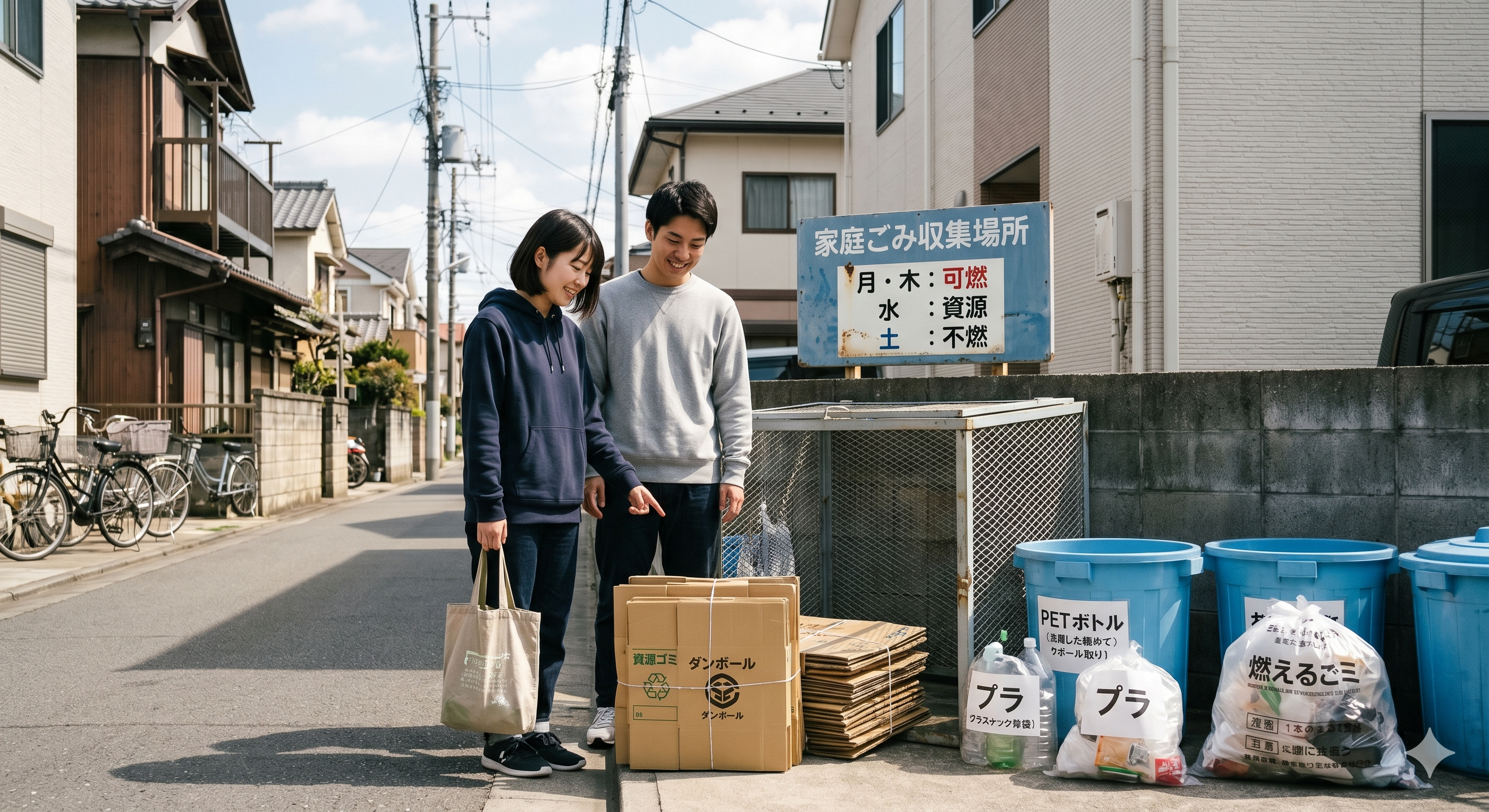
The very first "welcome to Japan" baptism by fire that almost every expat faces is garbage sorting.
In my home country, we had maybe two or three bins: "recycling" and "everything else." In my neighborhood in Japan, however, garbage must be meticulously sorted into more than 10 different categories.
Rules That Shift by Location
The first shock is that waste management rules are not standardized across Japan. Just moving to the next city over can completely flip the script:
・In City A: "All plastics go into resources/recycling."
・In City B: "Dirty plastics must go into burnable waste."
・In City C: "You must buy official, designated paid trash bags, or they won't collect it."
When I first moved in and the local ward office handed me a thick, multi-page "Garbage Sorting Guide," my head started spinning immediately.
Overly Detailed Deconstruction Steps
Take discarding a single plastic beverage bottle, for instance. You can't just throw it away; you have to follow these steps:
1.Rinse the inside thoroughly with water (it feels like wasting water, but it's mandatory).
2.Remove the plastic cap (this goes into the "Caps" bin).
3.Peel off the plastic label wrap around the bottle (this goes into "Plastic Packaging").
4.Crush the remaining bottle body (this finally goes into "PET Bottles").
A Foreigner’s Honest Thought:
"I just wanted a quick drink. Why do I have to perform surgery and deconstruct a piece of trash into three different categories? I feel like a factory worker!"
On top of that, you have to manage a strict schedule, like "Non-burnable trash is only on the 1st and 3rd Wednesday" or "Resource trash must be out by 8:00 AM on Thursday." I will never forget the despair of waking up late, running out at 8:05 AM, and seeing an empty collection spot with only my trash bag sitting there rejected.
If you mess up the rules, your neighbors (often the local elderly "neighborhood watch") will give you icy stares or slap a bright warning sticker on your bag and leave it on your doorstep. While it initially felt incredibly tedious, I eventually realized that the only reason Japan's streets are so pristine is because every single resident goes through this mind-boggling process every single day.
2. Unwritten Social Codes: The Superpower of "Reading the Room"
Perhaps the hardest part of living in Japan is grasping the rules that are never written down. The Japanese call this skill "Kuuki wo yomu" (reading the air/room).
Many foreigners grow up assuming that if something is forbidden, there will be a sign explicitly saying so. In Japan, society operates on the assumption that "even if it's not written down, common sense dictates you shouldn't do it."
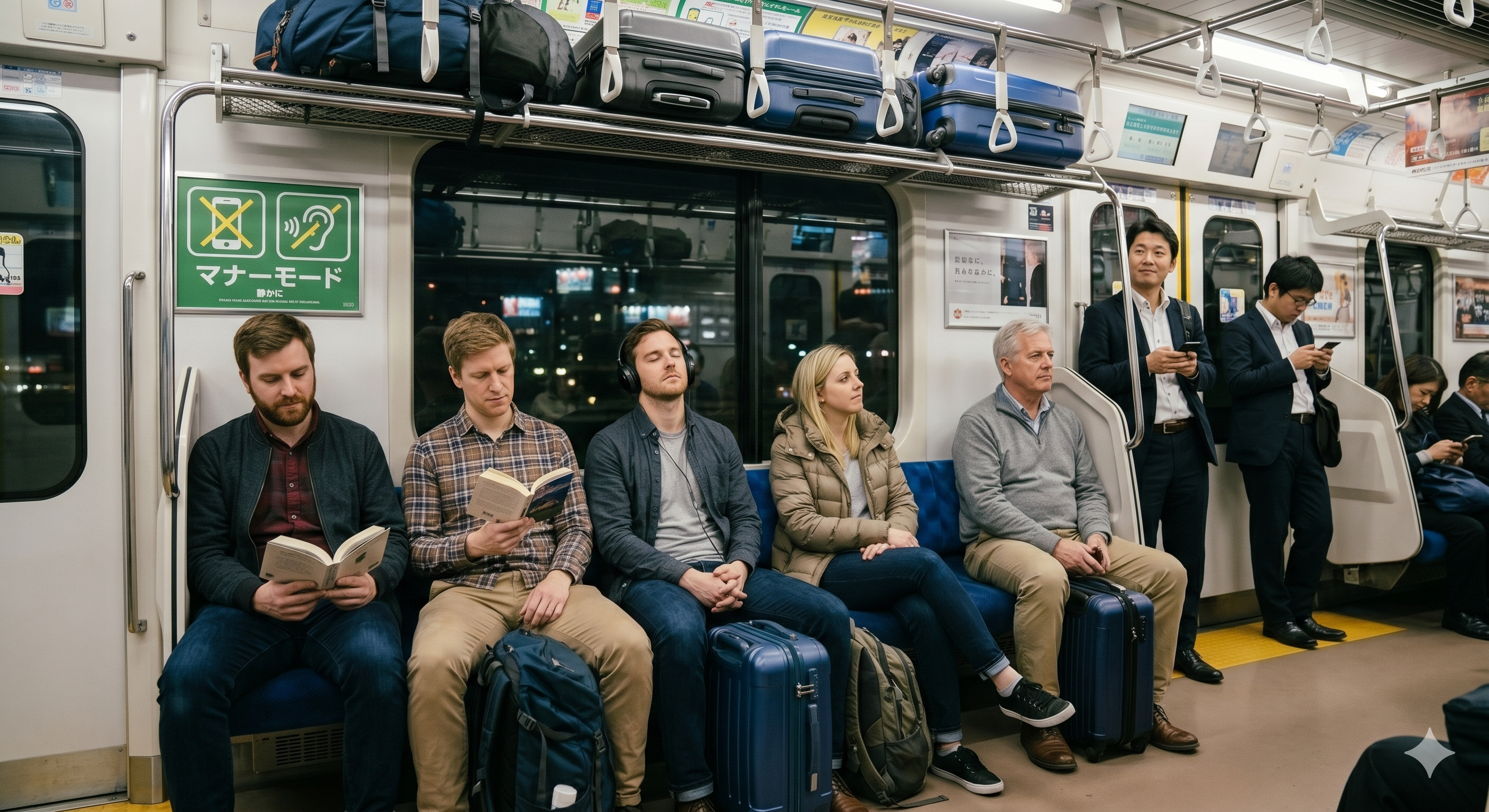
The Eerie Silence of Public Trains
When you board a Japanese train for the first time, the silence is striking. Hundreds of people can be packed into a single carriage, yet it is quieter than a library.
・Talking on the phone is an absolute taboo (keeping your phone on "Manner Mode" is a basic courtesy).
・Even if you are chatting happily with a friend, if your voice gets a bit too loud, you will feel the piercing weight of silent, judgmental glances from those around you.
・Audio leaking from your headphones is considered a major social offense.
Back home, public transit often features people playing loud music, having animated phone conversations, or snacking on the go. The unspoken pressure to maintain absolute silence on Japanese trains can be incredibly tense until you get used to it.
Neighborhood Associations and "Chonai-kai"
Whether you rent an apartment or buy a house, you will eventually encounter a unique local entity called the "Chonai-kai" (Neighborhood Association).
While they claim membership is voluntary, opting out can make it difficult to receive the Kairanban (a clipboard of local news circulated from house to house) or join community clean-up days.
Even a simple morning greeting requires a delicate balance. You shouldn't be overly familiar, but you absolutely cannot ignore people. A polite nod and a brief, scripted greeting are expected. For foreigners raised in cultures where self-assertion and vibrant friendliness are virtues, mastering this art of "stepping back to avoid bothering others" takes a high level of social calibration.
3. City Halls, Banks, and Renting: The Bureaucracy of Paper and Stamps
While Japan has a global reputation as a high-tech wonderland, its administrative and legal procedures remain deeply analog and rigid.
The High Barriers and Bizarre Fees of Renting
When trying to rent an apartment in Japan, many foreigners face immediate discouragement. It is still not uncommon to encounter landlords who refuse foreign tenants simply because they worry about language barriers or misunderstandings regarding complex housing rules.
If you are lucky enough to find a place, the breakdown of upfront fees can be baffling:
・Shikikin (Deposit): Money for cleaning and repairs when you move out (this makes sense).
・Reikin (Key Money): A non-refundable "gift" given to the landlord to thank them for letting you rent the apartment.
A Foreigner’s Honest Thought:
"I am already paying a high monthly rent. Why do I need to gift them thousands of dollars just to say thank you? If anything, they should be thanking me for choosing their property!"
Add to this the necessity of finding a "Guarantor" (or paying a hefty fee to a guarantor company), and you can easily watch several months' worth of rent vanish before you even get the keys.
The Grip of the "Hanko" and Perfectionist Paperwork
Step into a city hall or a bank, and you'll find that signature lines are frequently bypassed in favor of a "Hanko" (a personal name stamp). Though digital alternatives are gradually emerging, physical stamps remain vital for major transactions.
Furthermore, the strictness expected when filling out official forms is intense:
・If you write your address shorthand as "1-2-3" instead of spelling out "1-chome, 2-ban, 3-go" exactly as it appears on your residence card, you may be forced to rewrite the entire document.
・If a stroke of a kanji character hooks slightly the wrong way, your bank account application might face delays.
・Using correction tape is generally forbidden; you must cross out mistakes with two clean lines and stamp a tiny corrective Hanko (Teiein) directly over the error.
Fitting everything perfectly within the boxes without a millimeter of compromise is a nerve-wracking ritual every single time.
4. Workplace Traditions: Overtime, Drinking, and Hidden Meanings
If you enter the Japanese corporate world, the cultural difficulty spikes significantly. Business in Japan operates on its own set of absolute, non-negotiable customs.
The Sacred Ritual of "Meishi Koukan" (Business Card Exchange)
Watching Japanese professionals exchange business cards feels like observing a traditional martial art or tea ceremony.
・You must hold the card with both hands.
・You must present your card at a lower physical level than your counterpart's card as a sign of respect.
・You must never place your fingers over the other person’s name or company logo.
・Once received, you cannot simply pocket the card; you must arrange it neatly on the table in front of you during the meeting.
The first time I saw this, I wondered how a simple exchange of contact details could require so much choreography. Treat a business card carelessly, and you are instantly branded as disrespectful.
An Overdose of "Hou-Ren-So"
Japanese workplaces live by the mantra of "Hou-Ren-So"—which stands for Houkoku (Report), Renraku (Contact/Inform), and Soudan (Consult).
Instead of taking a task and running with it independently, you are expected to constantly loop in your team. You must pitch the idea to your supervisor, get alignment, wait for them to pass it up to senior management for official approval (Kessai), and provide micro-updates along the way. To an outsider, this can occasionally feel like micromanagement rather than collaboration.
Honne (True Feelings) vs. Tatemae (Public Facade)
Deciphering what a Japanese colleague actually thinks requires reading between the lines.
・If a boss says, "This proposal is very interesting," they often don't mean they want to adopt it. They usually mean, "We aren't going to use this, but I want to phrase it gently so I don't hurt your feelings."
・If a coworker says, "I'll go if I can make it," to an after-work gathering, it is a polite, indirect way of saying, "I am absolutely not coming."
Taking words at face value will lead to confusion. Navigating Tatemae to find the Honne is a linguistic and social puzzle far harder than learning Japanese grammar.
5. Everyday Etiquette: Little Quirks at Shops and Restaurants
Even minor, everyday interactions feature hidden rules that can catch a newcomer off guard.
| Scenario | Japanese Custom / Rule | Foreigner's Reaction |
| At a Pub (Izakaya) | An un-ordered small appetizer called Otoshi is served, and a seating fee is added to the bill. | It can initially feel like a hidden trick or a scam since you never asked for it. |
| Paying at a Register | Cash or cards are placed in a small tray (Carton) rather than handed directly to the cashier. | Coming from a culture where hand-to-hand transactions are standard, it can initially feel a bit distant or cold. |
| Fitting Rooms | You must take off your shoes before stepping onto the raised platform and wear a white face cover over your head. | While it makes perfect sense to protect the clothes from makeup stains, looking in the mirror wearing the fabric hood feels surreal. |
| Walking Around | "Distracted walking" with a phone or smoking while walking are strictly banned. Eating while walking is also generally frowned upon. | In many countries, grab-and-go eating is normal, leaving foreigners wondering where exactly they are supposed to eat their street food. |
Each of these rules has a rational underlying motive (keeping clothes clean, keeping streets safe and tidy), but confronting them without context can make Japan feel incredibly restrictive at first.
6. Why Are There So Many Rules? An Expat's Analysis
While it might sound like I am just complaining, I truly love living in Japan. Because of that love, I’ve spent a lot of time thinking about why this society is so bound by rules.
My conclusion is that Japanese rules are a collective wisdom designed to minimize friction and ensure comfort in a densely populated space.
Japan is an island nation where vast numbers of people live tightly packed together. If everyone acted purely on individual desire—discarding trash carelessly, blasting music on trains, and demanding exceptions to every bureaucratic policy—society would quickly descend into chaos.
・Meticulous garbage sorting protects local ecosystems and manages shared resources efficiently.
・Train silence respects the mental space of exhausted commuters heading home after work.
・Rigid administrative processes protect everyone involved if a legal or financial dispute arises later.
These rules are not meant to penalize individuals; they act as a defensive framework to preserve harmony (Wa). Viewing them through this lens makes it much easier to respect the daily routines.
7. A Survival Guide for Navigating the System
For those who have just arrived in Japan or are feeling worn down by the daily friction of these social codes, here are a few practical survival tips:
① Don't Overthink the "Why"
Trying to find deep, modern logic behind every single rule will only drain your mental energy. Some rules exist simply because they are historical holdovers or long-standing habits. Treat them like a quest in a video game—clear the requirement without letting it stress you out.
② Lean into the "Foreigner Card" Honestly
Most Japanese people do not expect expats to know every nuance of their social codes right away. If you find yourself confused, don't try to fake it. Simply ask politely:
"Sumimasen, gaikokujin nano de yokuわからないのですが、教えていただけますか?"
(Excuse me, I'm a foreigner and don't quite understand this. Could you show me how?)
People are incredibly helpful when approached with humility. It is always better to ask upfront than to accidentally break a rule and face an uncomfortable situation later.
③ Leverage Translation Apps
When dealing with garbage calendars or city hall paperwork, use live camera translation features (like Google Translate). Many local municipalities now offer multi-lingual garbage sorting apps specifically designed to make this easier for foreign residents.
④ Let Go of Perfection
If you ask Japanese residents if they follow every single rule perfectly, many will admit they occasionally get confused too. What matters most to the community is not absolute perfection, but the visible effort you make to respect your surroundings. If people see you trying, they will gladly overlook minor mistakes.
8. The Ultimate Hack: Make Japanese Friends on "Manabine" and Navigate the Culture Together!
While the survival tips above are great, there is an even better—and infinitely more fun—strategy: make local Japanese friends!
Staring at a dry government website or trying to memorize rigid social codes alone in your room is exhausting. But when you have a local friend who is genuinely interested in your culture, learning the ropes turns into an engaging exchange.
This is where a language and culture exchange platform like Manabine comes in.
What is Manabine?
Manabine isn't a traditional, rigid language school where you sit and take notes. It is a free, welcoming platform where international residents who want to learn about real Japanese life can connect with Japanese locals eager to learn languages and discover global cultures as equals.
Turning Confusing Rules into Shared Laughs
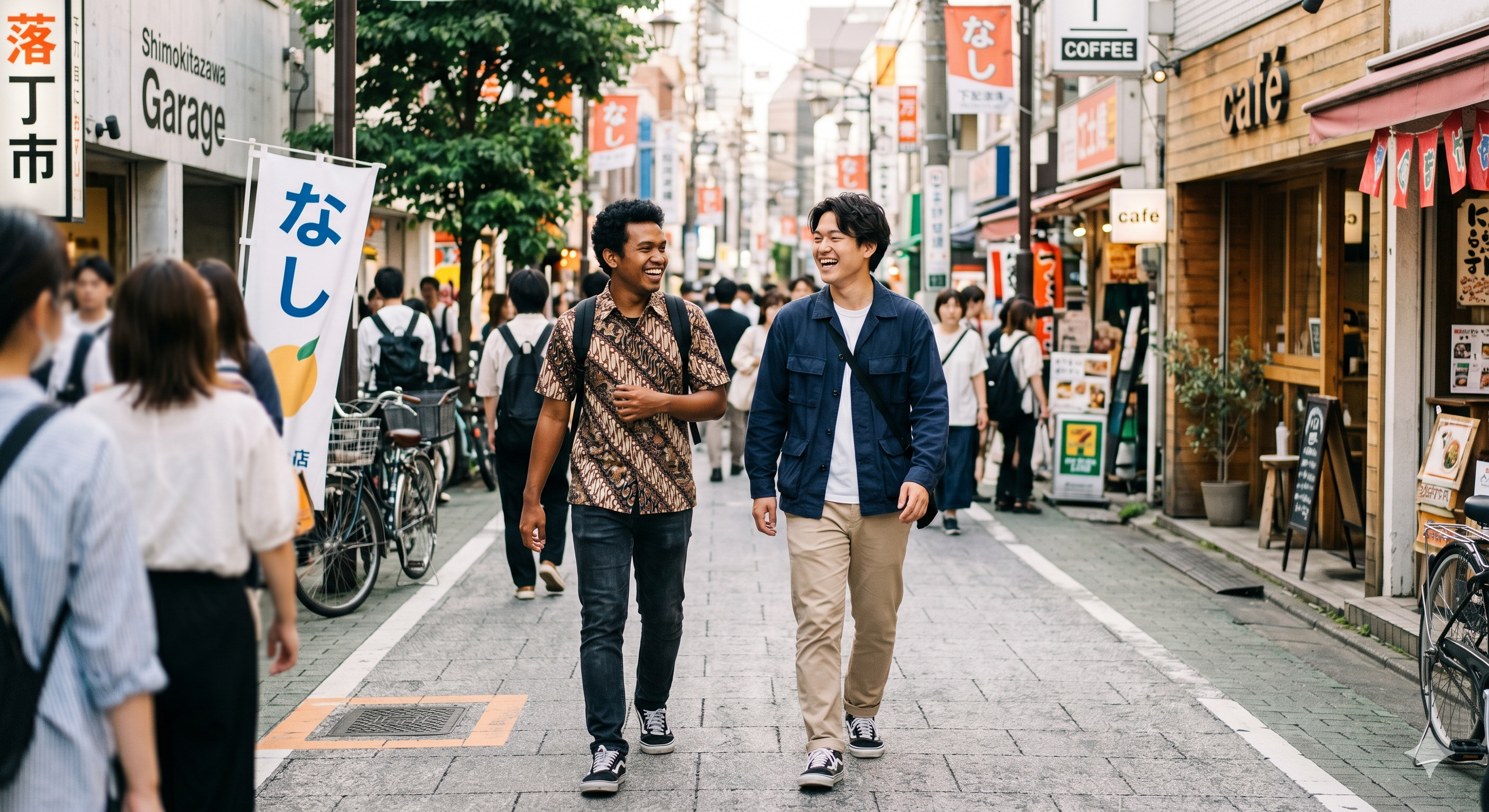
When you have a friend from Manabine, your daily struggles with Japanese life turn into excellent conversation starters. I remember telling a Japanese friend I met through the platform:
Me: "Sorting trash here feels like trying to solve a high-level puzzle every single morning!"
My Japanese Friend: "Haha, I totally get it! Honestly, even we have to look things up online sometimes because we forget what category things fall into!"
Hearing that instantly lifted a weight off my shoulders. I realized I wasn't failing; the system is genuinely detailed for everyone.
A local friend can share practical life hacks that you won't find in any official guidebook. When you share how things work back in your home country, it often sparks a fun, eye-opening conversation for them too. Your initial confusion ceases to be a burden and becomes a bridge to a genuine connection.
Learn the "Real" Language You Actually Need
A friend can also help you navigate conversational subtleties like Honne and Tatemae. You can safely ask them casual questions over coffee or an online chat:
・"If someone says this to me at work, what do they actually mean?"
・"What's the most polite way to phrase this request to my landlord?"
Learning through laughter and mutual support makes adjusting to life here feel natural. Instead of feeling isolated by the rules, you gain an insider's perspective while building lasting friendships.
Conclusion: The Beauty Inside the Structure
Japan's rules can be rigid, intricate, and occasionally overwhelming. There will absolutely be days when you miss the unstructured freedom of your home country.
Yet, it is precisely because everyone participates in this structured social agreement that Japan can offer things few other places can: streets where you can walk safely alone at night, trains that run with legendary punctuality, and exceptionally clean public spaces.
In a way, adapting to these rules is simply the "admission ticket" to enjoying life in this beautiful country.
Once the initial adjustment period passes, these habits become second nature. In fact, many expats find that when they return to their home countries, they suddenly feel disoriented by how chaotic things seem without those familiar structures!
Take a deep breath, take it one step at a time, and use platforms like Manabine to find friends who can help you master the rules of the game while enjoying the journey.
Basagin ang Pader ng Nihongo: Mindset at Action Plan para sa mga Dayuhang Estudyante|まなびね
この記事の関連記事
【Misteri Ajakan "Kapan-Kapan Makan Bareng, Yuk!"】Kenapa Orang Jepang Suka Mengajak tapi Tidak Pernah Menentukan Tanggal? Membongkar "Honne" (Isi Hati) di Balik Jawaban Ambigu Orang Jepang
Saya tidak bisa berbahasa …
Saya tidak bisa berbahasa …

Bukan Cuma Teori! Belajar "Bahasa Jepang Praktis" Gratis Lewat Obrolan Seru
Pendahuluan (Prolog) Salam da…
Pendahuluan (Prolog) Salam da…
Navigating the Maze of Rules and Regulations in Japan: A Foreigner’s Perspective and How to Survive It
Navigating the Maze of Rules a…
Navigating the Maze of Rules a…

Even While Living Overseas, I Want to Learn Japanese by Speaking with Japanese People
Even While Living Overseas, I …
Even While Living Overseas, I …

海外に住んでいても、日本人と話しながら日本語を学びたい
海外に住んでいても、日本人と話しながら日本語を学びたい 日…
海外に住んでいても、日本人と話しながら日本語を学びたい 日…
日本語を学びたい外国人を悩ませる、費用と時間の壁
日本語を学びたい外国人を悩ませる、費用と時間の壁 日本で暮…
日本語を学びたい外国人を悩ませる、費用と時間の壁 日本で暮…
.png)
Zero Effort for On-Site Staff! How to Create an Online Environment Where Candidates
Zero Effort for On-Site Staff!…
Zero Effort for On-Site Staff!…

現地スタッフの手間なし!候補生が自ら「話したくなる」環境をオンラインで作る方法
現地スタッフの手間なし!候補生が自ら「話したくなる」環境をオ…
現地スタッフの手間なし!候補生が自ら「話したくなる」環境をオ…