Even While Living Overseas, I Want to Learn Japanese by Speaking with Japanese People
日本語学習
2026-06-15
Even While Living Overseas, I Want to Learn Japanese by Speaking with Japanese People
There are people all over the world who want to learn Japanese.
Some people love Japanese anime and manga. Some are interested in Japanese music and movies. Some want to travel to Japan in the future. Some want to work in Japan. Some want to study at a Japanese university. Others simply want to make Japanese friends.
Everyone has a different reason, but the desire to “be able to speak Japanese” is spreading across borders.
However, for people living overseas, learning Japanese is not always easy.
They can buy Japanese textbooks. They can memorize vocabulary with apps. They can study grammar by watching videos. They can also find learning materials online.
Even so, many learners face the same problem.
“I am studying Japanese, but I have no one to speak with.”
“I do not have opportunities to talk with Japanese people.”
“I do not know if my pronunciation is correct.”
“Even though I study, when it comes to real conversation, the words do not come out.”
For people learning Japanese while living overseas, one of the biggest challenges is the lack of opportunities to speak with Japanese people.
Japanese Is Difficult to Master by Studying Alone
To learn Japanese, it is very important to study hiragana, katakana, kanji, grammar, and vocabulary.
At first, even learning the characters can be difficult. Learners have to memorize hiragana and katakana, gradually become able to read kanji, and understand basic grammar. Japanese also has many expressions that are different from English and other languages.
For example, even making a sentence like “I am studying Japanese” requires understanding word order and particles.
Particles such as “wa,” “ga,” “wo,” “ni,” and “de” are very difficult for Japanese learners. Even when learners understand the meaning, many people still get confused when trying to use them in actual conversation.
Japanese also has honorific language.
The Japanese used with friends is different from the Japanese used with teachers, company employees, or customers. Learners need to use polite expressions, casual expressions, and business expressions depending on the situation.
It is possible to study these things through books and videos.
However, there are many things that cannot be understood until you actually try speaking.
How fast does the other person speak?
Can they understand your pronunciation?
Which expression sounds natural?
How should you continue the conversation while looking at the other person’s reactions?
These are things that people gradually learn by actually speaking with Japanese people.
Japanese is not only knowledge to memorize. It becomes real ability when it is used in conversation with others.
When You Live Overseas, There Are Few Opportunities to Speak with Japanese People
If you live in Japan, there are many chances to hear Japanese in daily life.
At stations, convenience stores, schools, workplaces, hospitals, government offices, restaurants, and many other places, Japanese is part of everyday life. Of course, living in Japan does not automatically make someone fluent, but it does increase the number of opportunities to be exposed to Japanese.
On the other hand, when someone lives overseas, the places where they can use Japanese are limited.
If their family and friends do not speak Japanese, they may rarely use Japanese in daily life. Even if they study Japanese at school, they may have few chances to speak Japanese outside the classroom. Depending on the area, they may not have many opportunities to meet Japanese people at all.
Because of this, Japanese learners living overseas often focus mainly on reading, listening, and writing.
They memorize words with vocabulary apps.
They listen to Japanese through videos.
They study grammar with textbooks.
They practice writing kanji in notebooks.
All of these are important.
However, when speaking practice is lacking, learners can struggle when they actually try to have a conversation.
They may know the grammar in their head, but the words do not come out of their mouth. They may understand a little of what the other person is saying, but cannot reply. They may be able to introduce themselves, but once the conversation becomes more natural and free, they freeze.
Many Japanese learners may have had this kind of experience.
Even If You Ask Japanese People to Teach You Japanese, It Is Not Always Easy
Some people living overseas may have tried asking Japanese people directly, “Could you teach me Japanese?”
However, in reality, it is not always easy to find someone who will teach them.
This does not necessarily mean that Japanese people are cold or unkind.
Many Japanese people use Japanese naturally in their everyday lives. Because of that, when someone asks them to “teach Japanese,” they may not know what to teach or how to explain it.
Speaking Japanese and teaching Japanese are different things.
For example, Japanese people naturally use “wa” and “ga” in different ways. But when a foreign learner asks, “Why is it ‘wa’ here and ‘ga’ there?” many Japanese people may not be able to explain it clearly.
The same is true for honorific language.
Japanese people naturally change their expressions depending on the situation, but explaining why a certain phrase is polite or when it should be used is not easy.
Because of this, some Japanese people may think:
“I can speak Japanese, but I do not have confidence in teaching it.”
“What if I teach something incorrectly?”
“I am not a teacher, so I may not be able to explain it well.”
“I am too busy to teach regularly.”
“Teaching for free over a long period of time feels like a big burden.”
Also, when a foreign learner suddenly asks, “Please teach me Japanese,” the Japanese person may feel nervous.
What should they teach?
How much time will it take?
Can they match the learner’s Japanese level?
Can they explain things in English or in the learner’s native language?
When they think about these things, even without any bad intention, they may say, “I’m sorry, that is difficult.”
In other words, even if someone living overseas meets a Japanese person, it does not always mean they can learn Japanese from that person.
Even if they make Japanese friends, those friends may not become Japanese teachers. Even if they ask questions about Japanese, the other person may not be able to explain well. Even if someone teaches them at first, the relationship may not continue if the Japanese person becomes busy.
For Japanese learners overseas, “meeting Japanese people” and “being able to learn Japanese from Japanese people continuously” are not the same thing.
That is why it is important not only to look for Japanese people, but also to build relationships where both sides can learn from each other.
If the relationship is one-sided, with the learner simply asking, “Please teach me Japanese,” the burden on the Japanese person becomes heavy.
However, if the foreign learner can also teach their own language or culture to the Japanese person, the relationship changes.
The foreign learner learns Japanese.
The Japanese person learns a foreign language.
Both people teach each other and help each other.
In this kind of relationship, Japanese people also have a reason to participate.
It is not just “teaching Japanese.” They can also learn a foreign language, learn about another culture, and make friends from overseas.
That is why people living overseas who want to learn Japanese need more than a one-sided request. They need a system where people can learn from each other as equals.
When Japanese learners and Japanese people who want to learn foreign languages can meet, the time becomes meaningful for both sides.
Learners do not only receive help. They can also support someone else’s learning.
Because of that relationship, conversations become easier to continue.
Japanese learning does not have to begin only with a teacher-student relationship.
If both people want to learn, they can help each other through language.
Why People Study but Still Cannot Speak
Some people study Japanese but still cannot speak it well.
This is not because they are not trying hard enough.
In many cases, the reason is that they do not have enough speaking practice.
Language is similar to sports or music.
Reading the rules alone will not make someone good at soccer. Looking at sheet music alone will not make someone able to play the piano. People improve by actually moving their bodies and practicing again and again.
Japanese is the same.
Knowing grammar and being able to speak are not the same thing.
If someone has to think, “Which grammar should I use here?” before speaking, they may not be able to keep up with the speed of the conversation. Even if the other person waits, they may become nervous and forget words they already know.
That is why speaking practice is necessary.
Short sentences are enough.
Mistakes are okay.
Speaking slowly is okay.
What matters is gaining experience speaking Japanese in your own words.
Even if you cannot speak well at first, your mouth gradually gets used to Japanese as you speak again and again. Common expressions start to come out more naturally. Your listening ability also improves as you hear real Japanese from other people.
To become able to speak Japanese, learners need time to actually use Japanese.
The Purpose of Learning Japanese Is Not Only Exams
Some people who study Japanese aim to pass the Japanese Language Proficiency Test.
Passing an exam can give learners great confidence. It can also help with studying abroad or finding work. Exam preparation is important for checking grammar, reading, and listening ability.
However, the purpose of learning Japanese is not only exams.
Some people want to talk with Japanese people.
Some want to understand Japanese culture more deeply.
Some want to use their own words when traveling in Japan.
Some want to make Japanese friends.
Some want to work in Japan in the future.
Some want to do business with Japanese companies.
Some want to express their feelings in Japanese.
For people with these goals, conversation ability is very important.
On a test, learners may be able to choose the correct answer. But in real conversation, they need to understand the other person’s feelings and express their own thoughts. It is important not only to memorize example sentences from textbooks, but also to speak in their own words.
For example, when introducing themselves, it is better if they can talk not only about their name and country, but also about their interests, dreams, and why they became interested in Japan.
“I like anime.”
“I want to try cooking Japanese food.”
“I want to visit Kyoto someday.”
“I want to make Japanese friends.”
When learners can express these ideas in their own words, learning Japanese becomes more enjoyable.
Speaking with Japanese People Makes Learning More Enjoyable
When studying alone, it is easy to become tired.
You memorize words, but have nowhere to use them. You study grammar, but have no one to speak with. You watch videos, but cannot tell whether your Japanese is improving.
When this continues, it becomes difficult to stay motivated.
However, when learners have opportunities to speak with Japanese people, Japanese learning changes greatly.
They can actually use the words they learned.
Their Japanese reaches the other person.
The other person smiles and replies.
They learn expressions they did not know.
They can ask directly about Japanese life and culture.
These experiences bring great joy to learners.
“I’m glad I studied.”
“I want to be able to speak more.”
“Next time, I want to try using this expression.”
Learners begin to feel this way.
To continue learning Japanese, enjoyment is also important.
Continuing only through effort can be difficult. But when there is a connection with another person, the reason for learning becomes clear. Learners can feel their own growth more easily. Japanese becomes not just a subject to study, but a tool for connecting with someone.
We Live in an Age Where People Overseas Can Connect with Japanese People
In the past, it was not easy for people living overseas to create opportunities to speak with Japanese people.
If there were no Japanese people nearby, it may have been difficult to find someone to speak Japanese with. In areas without Japanese language schools or university classes, continuing to study may have been very hard.
However, today we live in an age where people can connect online.
Even if people live in different countries, they can use the internet to talk with Japanese people. They can practice speaking Japanese without going to Japan. They can connect from their own room, during a school break, or after work, as long as they can find a time that works for both sides.
This is a big opportunity for Japanese learners living overseas.
They do not have to wait until they go to Japan to start speaking Japanese.
Before studying abroad in Japan, they can get used to conversation. Before traveling to Japan, they can practice simple Japanese. For future work, they can also become more comfortable communicating with Japanese people.
Even while living overseas, the ways to learn Japanese are expanding.
The important thing is not only to look at learning materials, but also to have opportunities to speak with people.
Japanese People Also Want to Learn Foreign Languages
Just as people overseas want to learn Japanese, many Japanese people also want to learn foreign languages.
Some want to speak English.
Some want to talk with local people when traveling overseas.
Some want to use foreign languages at work.
Some want to make friends from other countries.
Some want to learn about cultures around the world.
Japanese people also have similar struggles when learning foreign languages.
“I am studying, but I have no one to speak with.”
“I do not know if my pronunciation is correct.”
“I get nervous when speaking with foreigners.”
“When it becomes a real conversation, the words do not come out.”
These problems are very similar to the struggles of people learning Japanese.
That is why connecting Japanese learners with Japanese people who want to learn foreign languages is so meaningful.
They can teach each other.
Foreign learners can learn Japanese from Japanese people.
Japanese people can learn foreign languages from foreign learners.
One side does not have to be the only teacher. Both people are learners.
This relationship is natural and equal.
Language Exchange as a Way to Learn
For people who want to learn Japanese, language exchange is one very good way to study.
Language exchange is a learning method where two people teach each other their languages.
For example, a person who wants to learn Japanese can be paired with a Japanese person who wants to learn English or another language. On one day, they can focus mainly on Japanese. On another day, they can focus on the language the Japanese person wants to learn. They can decide together how to use the time.
The good thing about this method is that learners can study through natural conversation, not only through formal lessons.
They can learn expressions that Japanese people actually use, not just textbook sentences. They can ask questions about Japanese culture and everyday life. They can also introduce their own country and culture to Japanese people.
In language exchange, learners can also become teachers.
Foreign learners do not only learn Japanese. They can teach their own native language and culture to Japanese people.
This can become a great source of confidence.
Even if someone feels, “My Japanese is still not good,” they can still teach their own language and culture. By helping each other, the conversation becomes more natural and easier to continue.
The Learning Environment People Overseas Need
For people learning Japanese while living overseas, what matters is an environment that is easy to continue.
Some people are busy every day. Some go to school. Some work. Some have family responsibilities. There are also time differences between countries.
That is why it is important to learn in a way that fits each person’s life.
If a learning method requires someone to attend at a fixed time every week, it may be difficult to continue. If a service is expensive, continuing for a long time may become a burden.
Japanese is not something people master all at once in a short time.
It becomes ability through steady learning over time.
That is why Japanese learners overseas need opportunities that allow them to keep learning without too much pressure.
Short conversations are enough.
Once a week is enough.
At first, even simple greetings are enough.
What matters is gradually building experience speaking with Japanese people.
“Hello.”
“What did you do today?”
“What Japanese food do you like?”
“In my country, we say it like this.”
Even simple conversations like these can help learners develop the ability to use Japanese.
Learners Need a Place Where Mistakes Are Okay
Many learners feel nervous when speaking Japanese.
“What if I make a grammar mistake?”
“What if my pronunciation sounds strange?”
“What if the other person cannot understand me?”
“What if I bother the Japanese person?”
When learners feel this kind of anxiety, they may stop before they even begin speaking.
However, mistakes are necessary in language learning.
People improve little by little by making mistakes.
No one can speak perfectly from the beginning. Japanese people also make mistakes when learning foreign languages. They may use the wrong words, struggle with pronunciation, or make grammar mistakes.
That is why people learning Japanese need a place where it is safe to make mistakes.
A place where the other person listens patiently.
A place where mistakes are not laughed at.
A place where correct expressions are taught kindly.
A place where people accept the learner’s feelings, even if the Japanese is not perfect.
When learners have this kind of environment, they can gain the courage to speak.
Improving Japanese requires courage.
And that courage is supported by warm human connection.
Learning Japanese Means Understanding Japan More Deeply
Learning Japanese is not only about memorizing words.
Through Japanese, learners can understand Japanese ways of thinking, culture, and human relationships.
For example, Japanese has many expressions that show consideration for others.
“Otsukaresama desu.”
“Yoroshiku onegaishimasu.”
“Arigatou gozaimasu.”
“Sumimasen.”
“Daijoubu desu ka?”
It is not enough to simply memorize the meanings of these words. Learners can deepen their understanding of Japanese by learning when these expressions are used and what kind of feelings they carry.
By speaking directly with Japanese people, learners can also learn about Japanese life that is not written in textbooks.
Japanese school life.
Japanese work culture.
Japanese food.
Seasonal events in Japan.
Ideas that Japanese people value.
Natural expressions used by young people.
Differences between regions.
These are things learners can discover through conversation with Japanese people.
Learning Japanese also means feeling closer to Japan.
Even while living overseas, speaking with Japanese people can make Japan feel less distant.
You Can Prepare Before Going to Japan
For people who want to go to Japan in the future, practicing conversation with Japanese people while still overseas is very good preparation.
People who want to travel to Japan can practice Japanese used at airports, hotels, restaurants, stations, and sightseeing spots.
People who want to study in Japan can get used to Japanese used in school life and conversations with teachers and classmates.
People who want to work in Japan can practice workplace greetings and simple business expressions.
People who want to make Japanese friends can practice self-introductions and conversations about hobbies.
They do not need to wait until they arrive in Japan to start everything.
They can begin preparing now, while still living overseas.
If they have experience speaking with Japanese people before going to Japan, their anxiety will become a little lighter.
“I have spoken with Japanese people before.”
“I can have simple conversations.”
“I learned that making mistakes is okay.”
These experiences can become great confidence.
Japanese learning does not begin only after arriving in Japan.
It can begin now, even while living overseas.
Do Not Let the Desire to Learn Japanese End in Loneliness
When people begin learning Japanese, many have hope.
They want to watch anime without subtitles.
They want to understand the meaning of Japanese songs.
They want to talk with Japanese people.
They want to go to Japan.
They want to work in Japan.
These feelings are wonderful.
However, when studying alone, people may sometimes become anxious.
“Will I really be able to speak someday?”
“Is my study method correct?”
“Does it make sense to continue like this?”
“There is no one around me who is learning Japanese.”
At times like this, connection with others can become the power to keep learning.
Meeting people who are also learning languages.
Speaking with Japanese people who can help with Japanese.
Helping Japanese people who want to learn your language.
When these relationships are created, Japanese learning is no longer lonely.
Studying alone at a desk is also important.
But when people speak with others, the Japanese they have learned comes to life.
Japanese is a language for communicating feelings to someone.
That is why learning while connecting with others is so important.
Even While Living Overseas, You Can Create Chances to Speak Japanese
Some people may think:
“I do not live in Japan, so I cannot speak Japanese.”
It is true that when someone lives overseas, there may be fewer chances to use Japanese. There may be few Japanese people nearby. There may be no Japanese language classes in the area.
However, today people can connect online.
Even while living overseas, it is possible to create chances to speak with Japanese people.
The important thing is not to wait until your Japanese is perfect, but to speak while you are still learning.
Many people think:
“I am not good enough yet, so I will speak after studying more.”
However, if speaking practice is always delayed, it becomes difficult to get used to real conversation.
Simple words are enough at first.
“Nice to meet you.”
“I am studying Japanese.”
“I like Japanese culture.”
“Please speak slowly.”
“Could you say that again?”
Starting with phrases like these is enough.
Conversation is not only for people who can speak perfectly.
People who are still learning are the ones who need speaking experience the most.
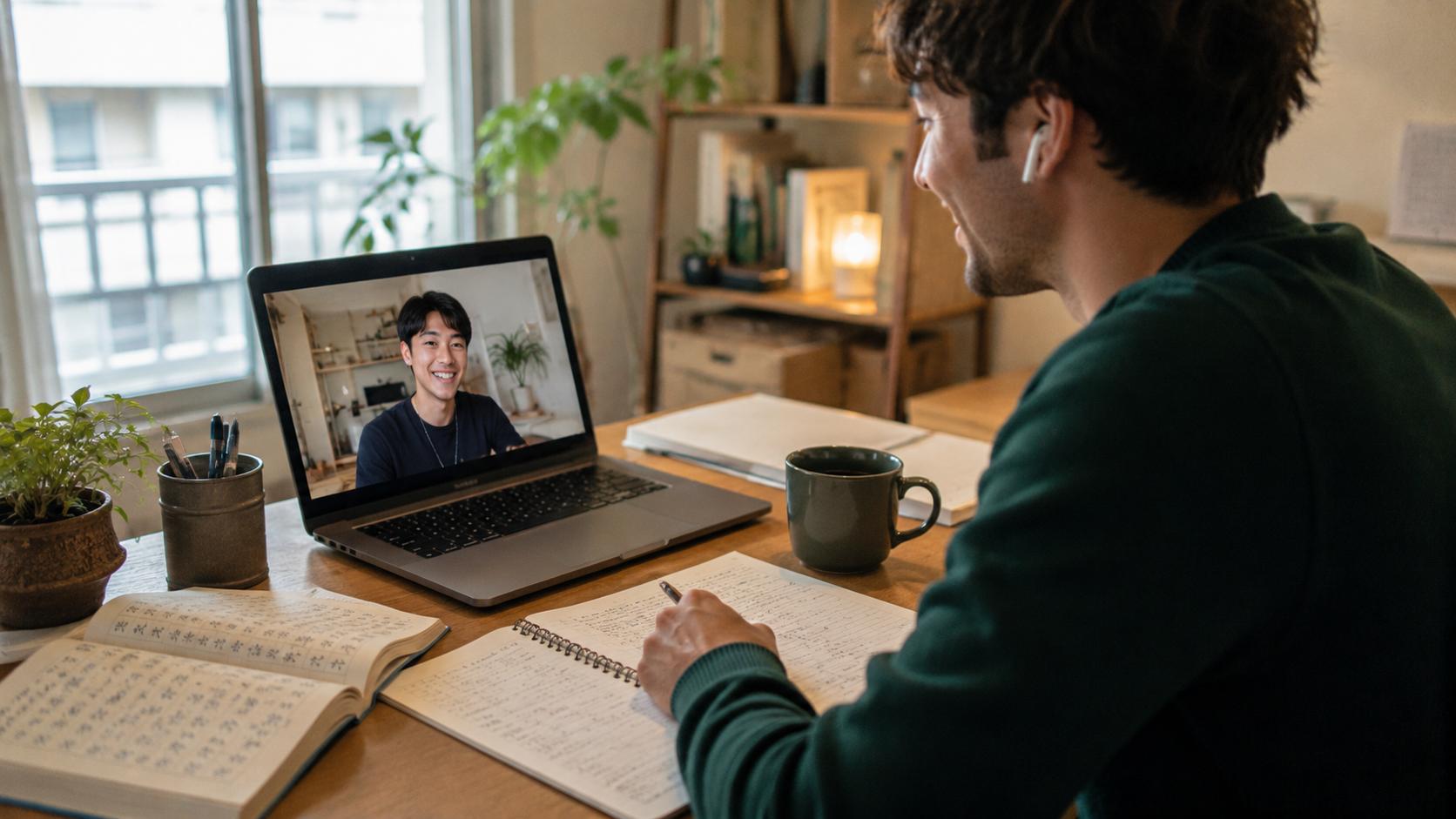
Learn Japanese by Connecting with Japanese People Through Manabine
Even while living overseas, some people want to learn Japanese by speaking with Japanese people.
For those people, Manabine can be one option.
Manabine is a language exchange service that connects people who want to learn Japanese with Japanese people who want to learn foreign languages, so that they can learn from each other.
Learners do not only receive Japanese instruction. They can also share their own language and culture with Japanese people.
By actually speaking with Japanese people, they can practice Japanese conversation. They can learn natural expressions that are not found in textbooks. They can also ask about Japanese life and culture.
People living overseas can also connect with Japanese people online.
They can start practicing Japanese conversation without going to Japan.
“I am studying Japanese, but I have no one to speak with.”
“I want to make Japanese friends.”
“I want to get used to conversation before going to Japan.”
“I want to teach Japanese people my own language too.”
For people with these feelings, language exchange can be a very good starting point.
Learning from Each Other Creates an Equal Relationship
The good thing about language exchange is that it is not a relationship where only one person receives help.
Foreign learners who want to learn Japanese can learn Japanese from Japanese people.
Japanese people can learn foreign languages and overseas cultures from foreign learners.
Both people are teachers, and both people are learners.
This relationship can also feel safe for foreign learners.
If someone feels, “I am the only one being taught,” they may become hesitant. They may worry that they are bothering the other person.
But in language exchange, they can also be useful to the other person.
They can teach their native language.
They can introduce their culture.
They can teach natural expressions.
They can talk about life overseas.
For Japanese people, this is also valuable learning.
Even if a learner’s Japanese is not yet good, their language and culture still have value for the other person.
This equal relationship helps conversations continue.
What Japanese Learners Overseas Need Is Connection
For people living overseas and learning Japanese, textbooks are important.
Apps are important.
Videos are important.
Study materials are important.
However, sometimes these are not enough.
What learners need is human connection.
Someone to actually speak with.
Someone who listens to their Japanese.
Someone who accepts mistakes.
Someone they can ask about Japan.
Someone they can talk to about their own country.
When this kind of connection exists, Japanese learning becomes more enjoyable and easier to continue.
Learning Japanese is not only about memorizing words.
It is about meeting people and expanding the world through language.
Even while living overseas, those encounters can be created.
Conclusion
There are many people who want to learn Japanese, even while living overseas.
They like Japan.
They want to speak Japanese.
They want to make Japanese friends.
They want to visit Japan.
They want to work in Japan.
They want to understand Japanese culture more deeply.
These feelings are very important.
However, when people live overseas, they may have few opportunities to speak with Japanese people and may struggle to find places where they can actually use Japanese.
Even if they meet Japanese people, asking directly, “Please teach me Japanese,” does not always lead to support.
Japanese people also have their own challenges, such as lack of time and lack of confidence in teaching. Being able to speak Japanese and being able to teach Japanese are not the same thing. Because of this, if Japanese learners simply ask Japanese people for help one-sidedly, the relationship may be difficult to continue.
That is why what is needed now is a relationship where both sides can learn from each other.
Foreign learners learn Japanese.
Japanese people learn foreign languages.
They teach each other’s languages and cultures while connecting as equals.
In this form, Japanese learning becomes more enjoyable and easier to continue.
Some people study with books and apps but cannot practice conversation.
Some understand videos but cannot speak in their own words.
Some want to learn Japanese but have no one to talk to.
People with these struggles are not alone.
To become able to speak Japanese, learners need not only knowledge, but also real speaking experience.
And even while living overseas, it is possible to connect with Japanese people.
Japanese conversation practice can begin before going to Japan.
Your Japanese does not have to be perfect.
Mistakes are okay.
Short conversations are enough.
What matters is trying to use Japanese to connect with someone.
Even while living overseas, you may want to learn Japanese by speaking with Japanese people.
You do not have to keep that feeling to yourself.
The desire to learn Japanese becomes a great power when it is connected with people.
And that first step can lead not only to better Japanese, but also to new friends, new cultures, and a new future.
この記事の関連記事
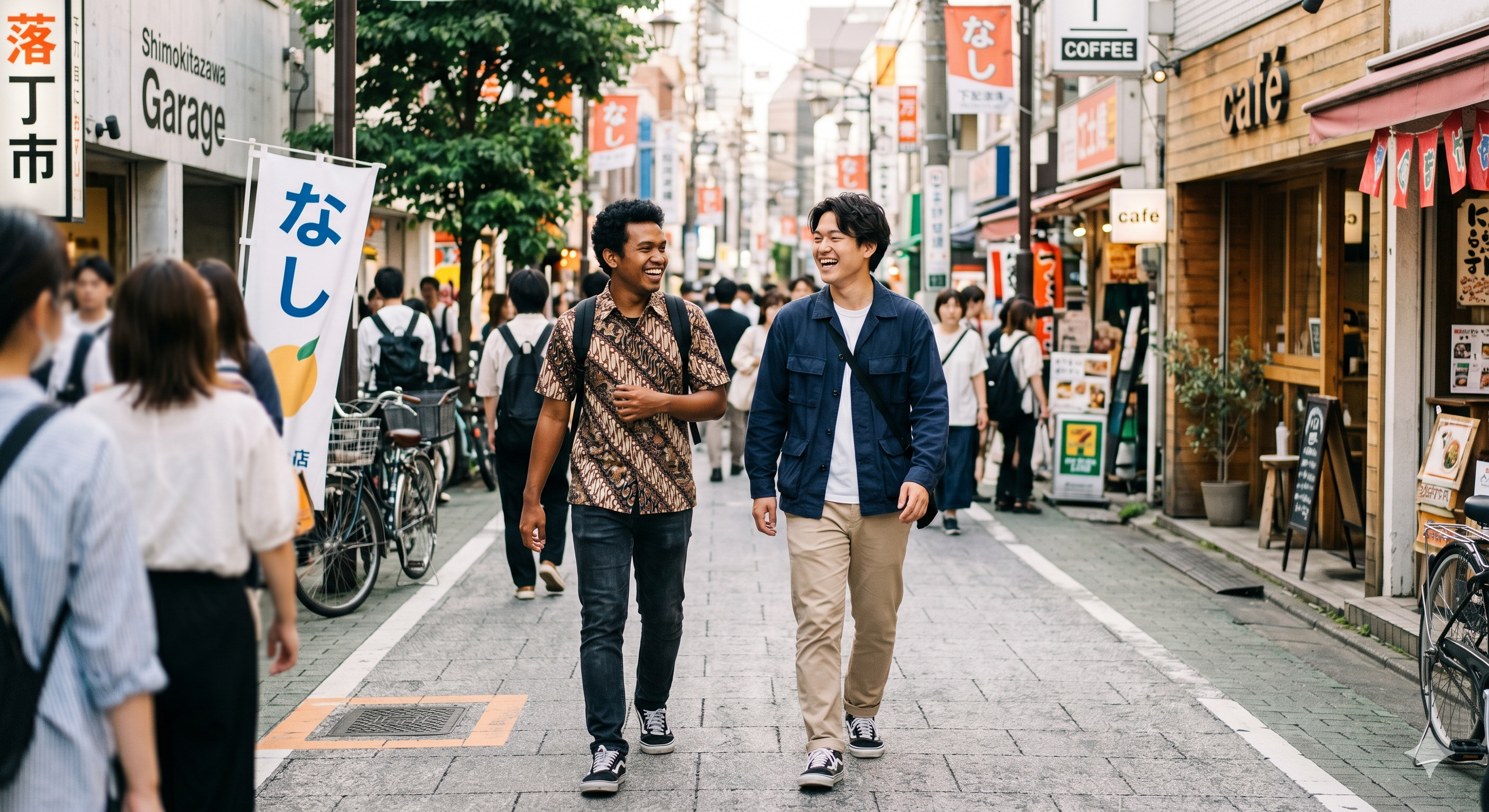
【Misteri Ajakan "Kapan-Kapan Makan Bareng, Yuk!"】Kenapa Orang Jepang Suka Mengajak tapi Tidak Pernah Menentukan Tanggal? Membongkar "Honne" (Isi Hati) di Balik Jawaban Ambigu Orang Jepang
Saya tidak bisa berbahasa …
Saya tidak bisa berbahasa …
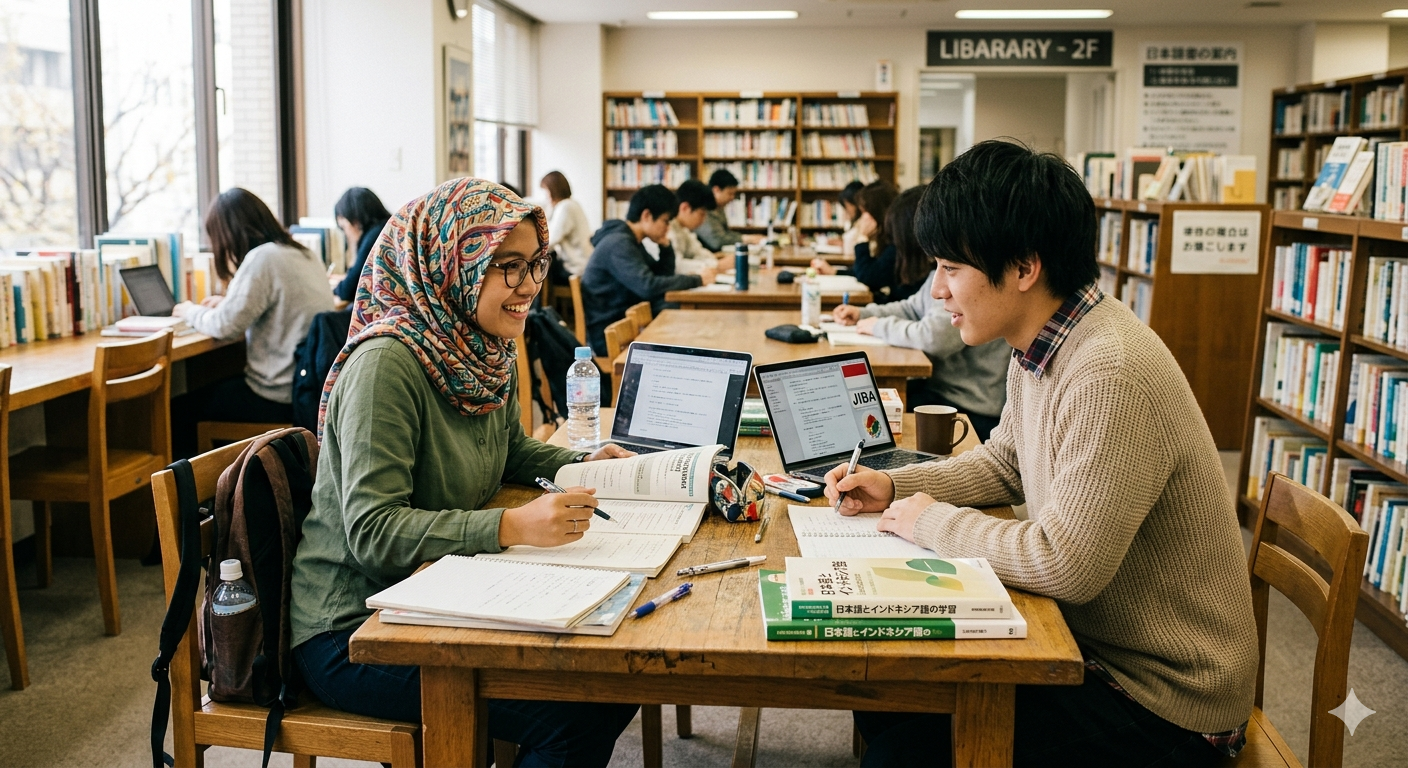
Bukan Cuma Teori! Belajar "Bahasa Jepang Praktis" Gratis Lewat Obrolan Seru
Pendahuluan (Prolog) Salam da…
Pendahuluan (Prolog) Salam da…
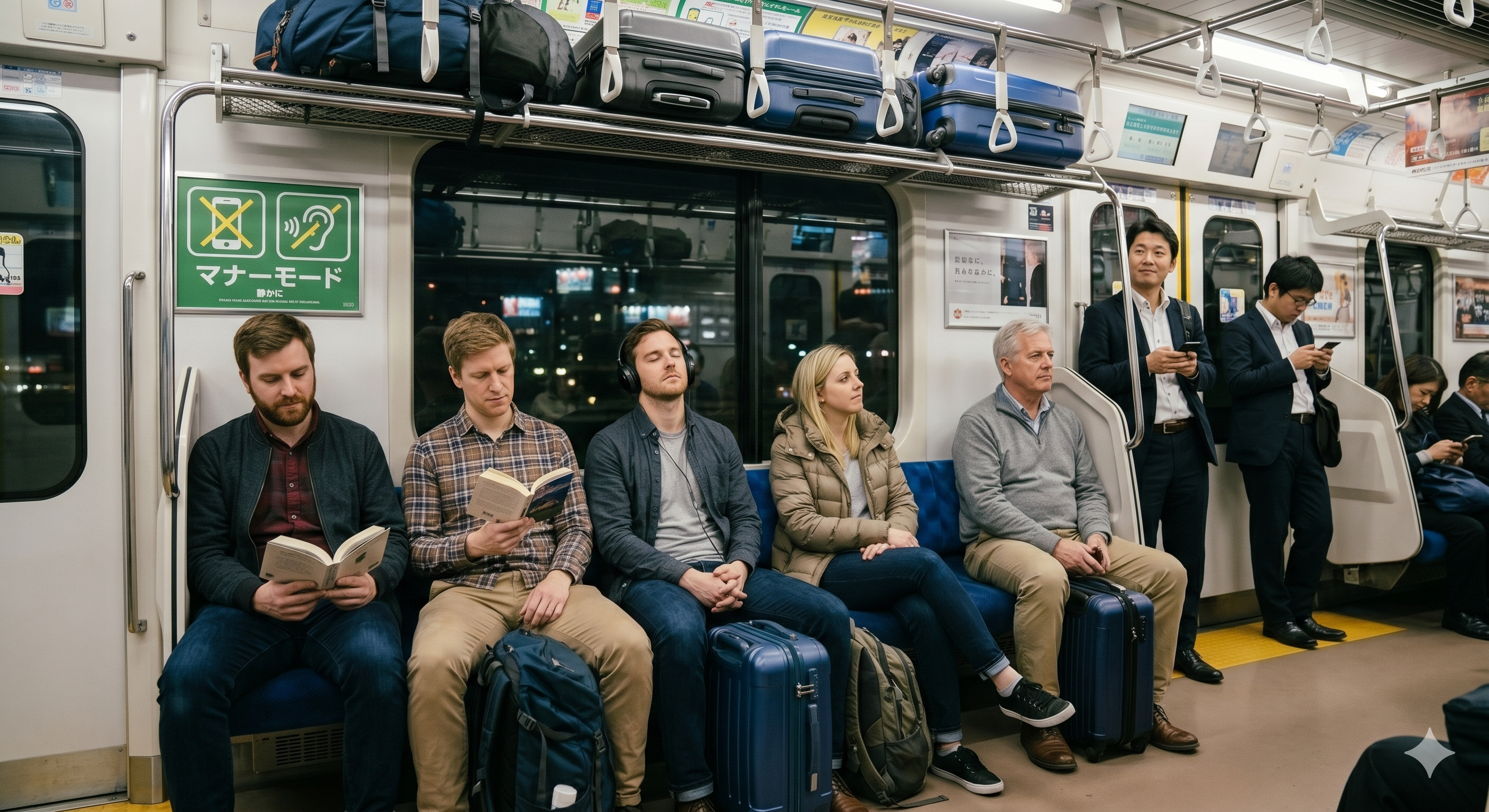
Navigating the Maze of Rules and Regulations in Japan: A Foreigner’s Perspective and How to Survive It
Navigating the Maze of Rules a…
Navigating the Maze of Rules a…
Even While Living Overseas, I Want to Learn Japanese by Speaking with Japanese People
Even While Living Overseas, I …
Even While Living Overseas, I …
海外に住んでいても、日本人と話しながら日本語を学びたい
海外に住んでいても、日本人と話しながら日本語を学びたい 日…
海外に住んでいても、日本人と話しながら日本語を学びたい 日…
日本語を学びたい外国人を悩ませる、費用と時間の壁
日本語を学びたい外国人を悩ませる、費用と時間の壁 日本で暮…
日本語を学びたい外国人を悩ませる、費用と時間の壁 日本で暮…
.png)
Zero Effort for On-Site Staff! How to Create an Online Environment Where Candidates
Zero Effort for On-Site Staff!…
Zero Effort for On-Site Staff!…
現地スタッフの手間なし!候補生が自ら「話したくなる」環境をオンラインで作る方法
現地スタッフの手間なし!候補生が自ら「話したくなる」環境をオ…
現地スタッフの手間なし!候補生が自ら「話したくなる」環境をオ…