
When Japanese Language School Doesn’t Feel Like Enough: An Honest Study Guide
日本語学習
2025-11-24

Are you studying at a Japanese language school, but secretly thinking:
・ “My grades are okay, but I still can’t speak well.”
・ “I understand grammar in class, but I freeze when I talk to real Japanese people.”
・ “I’m paying a lot of money… shouldn’t my Japanese be more fluent by now?”
If you feel this way, you are **not** alone.
Japanese language schools do many important things for you:
・ They give you structure and routine.
・ They explain grammar step by step.
・ They help you prepare for JLPT and other exams.
These things are valuable. This article is **not** about criticizing schools.
But there is one honest truth:
> No school in the world can give you **all** the Japanese you need.
> Especially real, everyday Japanese that you use with real people.
To really feel comfortable in Japanese, you need **two things**:
1. The foundation you get from your classes.
2. Extra practice outside of class, especially with native speakers.
In this article, we’ll talk honestly about:
・ Why your Japanese feels “stuck” even when you are studying hard.
・ What most schools can and cannot do for you.
・ How to build a simple study plan that combines school + self‑study + real conversation.
・ How to use language exchange (and a free platform like **manabine**) to practice 1-on-1 with Japanese people.
The goal is not to make you study more hours.
The goal is to help you use your time in a way that actually changes your Japanese.
Key points of this article
・ Japanese language schools are helpful, but they cannot give you enough **real-life speaking time**.
・ If you feel “I’m learning, but not using,” that feeling is normal and fixable.
・ You can create a **simple system**: class for input + self-study for review + language exchange for output.
・ 1-on-1 language exchange with native speakers is one of the easiest ways to practice for free.
・ A platform like **manabine** can connect you with Japanese partners who also want to learn your language.
Table of Contents
1. Why language schools are helpful (and what they can’t do)
2. The real reasons you feel “stuck” in your Japanese
3. What “real Japanese” looks like outside the classroom
4. A simple study framework: class + review + output
5. Practicing with native speakers through language exchange
6. How a free platform like manabine fits into your routine
7. Mindset tips so you don’t burn out
8. Summary: You don’t need to choose “school or no school”
1. Why language schools are helpful (and what they can’t do)
First, let’s be fair: Japanese language schools play an important role.
1-1. What language schools do well
Most schools are very good at:
・Structure and schedule
You have class at a fixed time. This forces you to study regularly.
・Grammar explanation
Teachers can explain difficult points, answer questions, and correct your mistakes.
・Level-based curriculum
You progress from N5 → N4 → N3 → N2 with textbooks and tests.
・Study environment
You meet classmates, share problems, and encourage each other.
All of this is **valuable**. Without school, many learners have no idea where to start.
1-2. What schools cannot do for you (and that’s okay)
At the same time, there are things that schools **naturally** cannot provide enough of:
1-on-1 speaking time with a teacher
In a class with 10–20 students, each student only gets a few minutes to speak.
・Real-life topics that match your actual life
Textbook topics are safe and general. Your real life is much more specific.
・Real speed and real accents
Teachers usually speak clearly and slowly. Real Japanese people all speak differently.
・Flexible practice based on your work/hobbies/family
Schools must teach the same content to everyone.
This is not a problem with your school. It is simply the limit of group lessons.
To go beyond that limit, you don’t need to quit school.
You just need to add something extra outside of class.
2. The real reasons you feel “stuck” in your Japanese
If you feel:
> “I understand in class, but I can’t use it.”
there are usually a few simple reasons.
2-1. Input and output are unbalanced
In many classrooms, the focus is on **input**:
・ reading dialogues
・ listening to audio
・ watching the teacher explain
But outside the classroom, life demands **output**:
・ speaking quickly in a shop or office
・ writing messages and emails
・ reacting to what people say
If you mainly receive Japanese (input) and rarely produceit (output), your brain becomes good at understanding and weak at speaking.
2-2. You don’t repeat enough
Sometimes students say, “We already studied this grammar. I want something new.”
But language doesn’t work like a checklist. You don’t truly own a pattern until you:
・ hear it many times, in different contexts
・ say it many times, with your own meaning
・ hear it used by real people in real situations
Without repetition, knowledge stays “in the book,” not “in your mouth.”
2-3. You rarely speak to real Japanese people
You might speak Japanese to:
・ your teacher
・ other international students
Both are useful, but:
・ Teachers often know what you want to say and help you too much.
・ Classmates may share the same mistakes and same accent as you.
Real progress happens when you communicate with native speakers who don’t speak your language well. Then you must really use all your Japanese to survive the conversation.
This sounds scary, but it is also exciting—and very effective.
3. What “real Japanese” looks like outside the classroom
In textbooks, Japanese often looks like this:
> 田中さんは昨日、映画を見ました。その映画はとても面白かったです。
In real life, you will more often hear:
> 昨日さ、映画見たんだけど、めっちゃおもしろかったよ。
You don’t need to copy every casual expression, but you do need to:
・ get used to shortened forms
・ hear natural intonation
・ recognize common fillers (えっと、あの、なんか、みたいな)
・ understand when people speak faster than your teacher
Real Japanese also includes:
・ how people actually refuse invitations politely
・ how they change their style when talking to a boss vs. a friend
・ how they joke or express feelings indirectly
These things are very hard to learn only from books.
You learn them by spending time with Japanese people, even just 30 minutes at a time.
4. A simple study framework: class + review + output
You don’t need a complicated system. A simple framework is enough.
Think of your Japanese learning as three parts:
1. Class – learn something new
2. Review – make sure you really understand it
3. Output – actually use it with someone
4-1. Class: your foundation
・ Go to class.
・ Listen actively.
・ Ask questions when you’re confused.
This is where new grammar, vocabulary, and structures come from.
4-2. Review: 15–20 minutes per day
After class (or in the evening), spend just 15–20 minutes to:
・ read your notes
・ say example sentences aloud
・ pick 1–2 grammar points you want to use this week
The goal is not to memorize every single word perfectly.
The goal is to choose a **small number of items** that you will actually try to use.
4-3. Output: speak and write, even a little
Find at least one way to use Japanese **outside** the classroom:
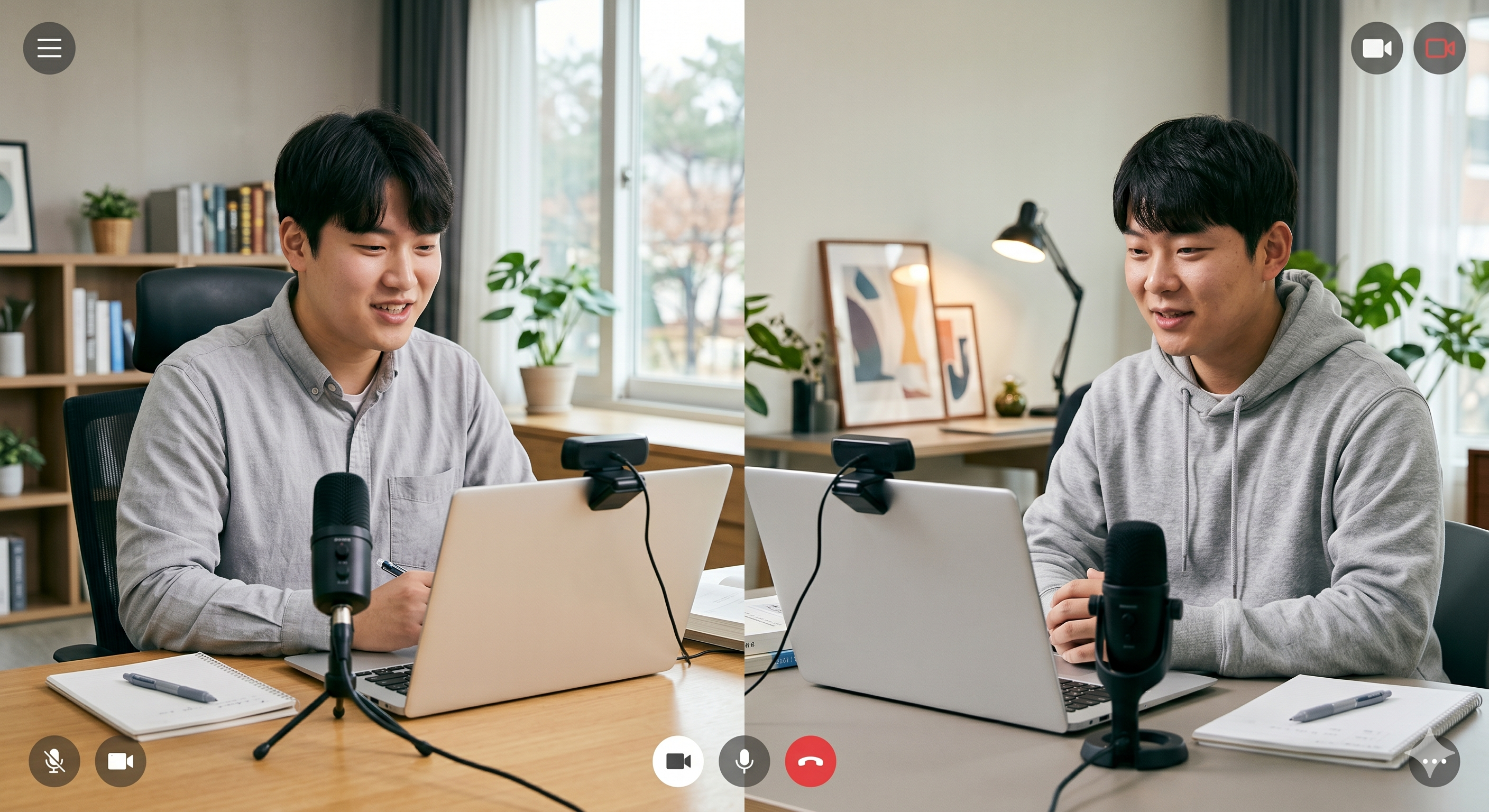
・ language exchange 1-on-1
・ short messages with Japanese friends
・ simple posts in Japanese on social media
・ talking to staff in shops or cafes
If possible, combine this with a regular partner through language exchange. That way, you always know when and with whom you can use this week’s Japanese.
4.jpg)
5. Practicing with native speakers through language exchange
Language exchange is a powerful tool, especially for students who already attend a school.
5-1. Why it works so well together with school
At school, you learn:
・ correct grammar
・ safe phrases
・ basic reading and listening
In language exchange, you:
・ test those phrases in real conversation
・ learn which expressions feel natural or strange
・ pick up new words that are not in your textbook
Together, they make a **complete environment**:
・ School = “Gym for your brain”
・ Language exchange = “Game or real match”
Both are important. One without the other is incomplete.
5-2. What a typical language exchange session looks like
Imagine you have a 60-minute online session with a Japanese partner.
Example structure:
・ 10 minutes: warm-up, small talk
・ 20 minutes: Japanese time (you speak mostly Japanese)
・ 20 minutes: your language time (you help them)
・ 10 minutes: review, questions, planning for next time
You can:
・ bring homework from class and ask, “Does this sound natural?”
・ practice a short self-introduction for a school event or job interview
・ talk about your day using grammar you just studied
This makes your school content feel **alive**, not just “for the test.”
6. How a free platform like manabine fits into your routine
You might be thinking:
> “Language exchange sounds good, but how do I find a partner?”
There are many ways: apps, social media, local events, and more.
Among them, there are also **online platforms designed specifically for language exchange
One example from Japan is manabine (まなびね)
6-1. What is manabine?
manabine is a free language exchange platform that connects:
・ people who want to learn Japanese
・ Japanese people who want to learn foreign languages (for example, English)
The idea is simple:
・ You help a Japanese partner learn your language.
・ They help you learn Japanese.
・ You meet 1-on-1 online, at times you decide together.
The service aims to be funded by advertising, so users can join without paying lesson fees.
6-2. How you might use manabine with your school
For example:
・ Use school time to learn new grammar and vocabulary.
・ Use review time at home to prepare 3–5 sentences using that grammar.
・ Use manabine once or twice a week to **try those sentences** with a real Japanese partner.
This way:
・ Your school learning does not stay only in your notebook.
・ You get used to *reacting* in Japanese, not only repeating.
You don’t need to promote manabine in your school or switch from your current lessons.
Just think of it as one more tool that makes your Japanese more real.
7. Mindset tips so you don’t burn out
When you add language exchange and self-study to your school life, it’s important not to push yourself too hard.
7-1. Aim for “small but regular,” not “perfect and heavy”
It is better to:
・ study 20 minutes a day for 6 days
than
・ study 2 hours in one day and do nothing for a week.
Consistency beats intensity.
7-2. Focus on progress, not perfection
Instead of asking:
・ “Am I fluent yet?”
ask:
・ “Can I say more than 3 months ago?”
・ “Is this week’s conversation a bit easier than last month’s?”
Small progress is still progress.
7-3. Remember why you started
When you feel tired or frustrated, remind yourself:
・ Why did I start learning Japanese?
・ What do I want to do with Japanese in the future?
Make friends?
Work in Japan?
Enjoy games and anime without subtitles?
Your reason is your fuel. Without fuel, any method will feel heavy.
8. Summary: You don’t need to choose “school or no school”
If you feel that “Japanese language school is not enough,” it doesn’t mean your school is bad, and it doesn’t mean you are a bad student.
It simply means this:
・ Group classes alone cannot give you enough **real speaking time**.
・ To feel comfortable in Japanese, you need some **extra output practice**.
The good news:
・ You don’t have to quit school.
・ You don’t have to spend a lot of money.
・ You don’t have to study all day.
You can:
1. Keep using your school as a strong foundation.
2. Add short, regular review at home.
3. Use language exchange (for example, through a free platform like manabine) to talk 1-on-1 with native speakers.
With this combination, your Japanese will slowly change from:
> “I can understand the textbook, but I’m scared to speak.”
into:
> “I still make mistakes, but I can actually talk to Japanese people.”
And that is the real goal of learning Japanese.
You don’t have to do everything perfectly.
Just choose one small action you can start this week—sending a message, booking a 30-minute exchange, or reviewing yesterday’s grammar out loud.
That small step, repeated many times, will take you much further than you imagine.
この記事の関連記事

担当者の負担を劇的に減らす!外国人社員向け「手間なし」日本語教育のコツ
担当者の負担を劇的に減らす!外国人社員向け「手間なし」日本語…
担当者の負担を劇的に減らす!外国人社員向け「手間なし」日本語…

告别课本?从“交日本朋友”开始的真实日语学习
告别课本?从“交日本朋友”开始的真实日语学习 在正文开始之…
告别课本?从“交日本朋友”开始的真实日语学习 在正文开始之…

外国人に日本語を教える第一歩!生きた日本語は「楽しい交流」から始まる
近年、日本のビジネスシーンにおいて、外国籍のメンバーと共に働…
近年、日本のビジネスシーンにおいて、外国籍のメンバーと共に働…

Tunay na Boses mula sa Ibang Bansa】Ang
Panimula: Ang Minamahal na Wik…
Panimula: Ang Minamahal na Wik…

【제목】 "그 일본어, 조금 어색할지도?" 원어민 친구를 사귀어 생생한 회화 실력을 극적으로 높이는 방법
(도입부 인사말) 안녕하세요! 언어 교환 플랫폼 '마나…
(도입부 인사말) 안녕하세요! 언어 교환 플랫폼 '마나…

語言是為了交朋友!沒有教科書的真實日文溝通術
【重要聲明】 首先,請容我向各位說明一件事:我本人並不會說…
【重要聲明】 首先,請容我向各位說明一件事:我本人並不會說…

Basagin ang Pader ng Nihongo: Mindset at Action Plan para sa mga Dayuhang Estudyante
Paunawa: Hindi po ako nakakapa…
Paunawa: Hindi po ako nakakapa…

日本語学校に通う方向け・日本語をさらに伸ばす方法と実践ガイド
日本へようこそ、そして毎日の日本語学校での学び、本当にお疲れ…
日本へようこそ、そして毎日の日本語学校での学び、本当にお疲れ…




.png)