
Learn Japanese for Free: 1-on-1 Language Exchange with Native Speakers
日本語学習
2025-11-23

1. Introduction
Do you want to speak real Japanese, but…
・Textbooks feel boring or too formal
・Classes and private lessons are too expensive
・You feel shy speaking Japanese in front of many people
If that sounds like you, you’re not alone.
Many learners say:
“I know some grammar and vocabulary,
●but I cannot actually talk to Japanese people.”
●The truth is:
You don’t become confident in Japanese only by studying books.
You become confident by using Japanese with real people.
That’s where 1-on-1 language exchange with native speakers can help you.
And the best part: it can be free.
In this article, you’ll learn:
・What 1-on-1 language exchange is
・Why it’s so powerful for improving your Japanese
・How to make the most of your sessions
・And how to use a platform like manabine(まなびね) to find Japanese partners for free
Take it slowly, read at your own pace, and imagine yourself actually speaking Japanese with a friendly partner.
5.jpg)
2. Article points (what you’ll learn)
・Why textbooks and apps are not enough for real conversation
・What 1-on-1 language exchange looks like in real life
・How to practice Japanese for free with native speakers
・Simple tips to feel safe and relaxed when you speak
・How to use manabine, a free language exchange platform, in the second half of your learning journey
3. Title (again)
Learn Japanese for Free: 1-on-1 Language Exchange with Native Speakers
4. Table of Contents
1.Why it’s hard to practice Japanese in real life
2.What is 1-on-1 language exchange?
3.Why language exchange is perfect for Japanese learners
4.How to use your sessions: practical ideas
5.Using manabine: a free platform to meet Japanese partners
6.Tips for shy learners and beginners
7.Final message: your Japanese can grow, step by step
5. Why it’s hard to practice Japanese in real life
Maybe you live in Japan.
Maybe you live overseas and love Japanese anime, games, or culture.
In both cases, you probably already noticed:
・It’s easy to study Japanese
・It’s hard to use Japanese with real people
Here are some common reasons.
5-1. Textbooks don’t talk back
Textbooks and apps are great for:
・learning grammar
・memorizing vocabulary
・understanding basic phrases
But they don’t answer you.
They don’t react, don’t ask follow-up questions, and don’t tell you:
“That sounds a little unnatural, try saying it like this instead.”
So you may “know” many words, but when you meet a Japanese person, your mind suddenly goes blank.
5-2. Classes can be expensive and not flexible
Japanese schools and online lessons are helpful, but:
・Monthly fees can be high
・Class times are fixed
・You may be one of many students in a group
You might get only a few minutes to speak in a one-hour lesson.
5-3. It’s scary to talk to strangers in Japanese
Even if you meet Japanese people in your daily life, talking in Japanese can feel scary:
・“What if I make a mistake?”
・“What if they switch to English?”
・“What if I don’t understand their answer?”
That’s totally normal.
Most learners feel this way.
This is why you need a safe place where:
・Mistakes are OK
・The other person is patient
・You can speak slowly
・You are not paying by the minute
Language exchange can be that place.
6. What is 1-on-1 language exchange?
Language exchange (言語交換 / ランゲージエクスチェンジ) is very simple:
・You teach your native language
・Your partner teaches their native language
For example:
・You: English / Vietnamese / Spanish / Thai …
・Partner: Japanese
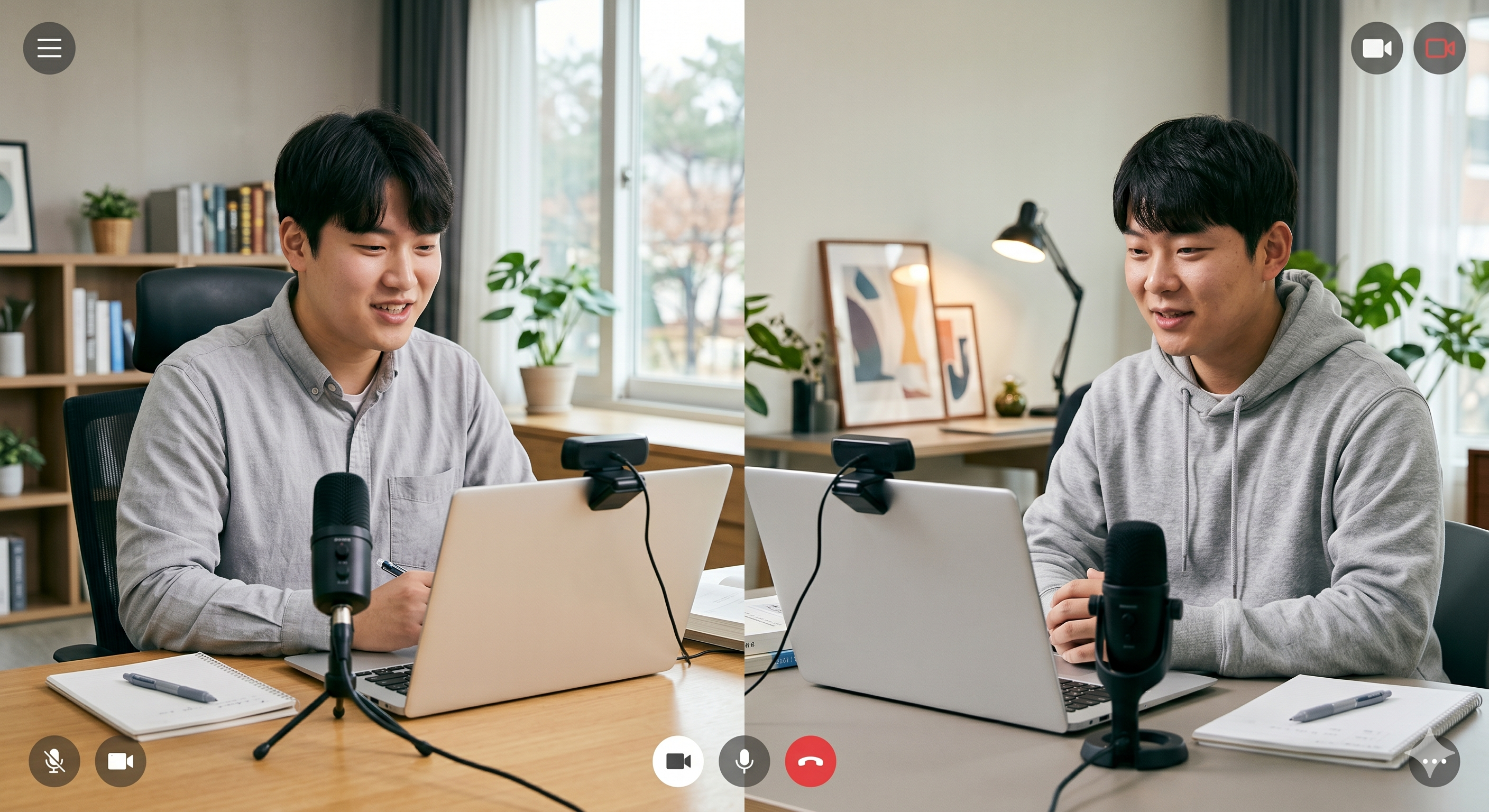
You meet online (video call or audio call) and divide the time:
・15–30 minutes in Japanese → you practice
・15–30 minutes in your language → your partner practices
So you are:
・a student when you speak Japanese
・a teacher when you speak your native language
It’s a fair exchange, not a paid lesson.
You don’t need to be a professional teacher.
Just being a native speaker of your language is already very valuable for your partner.
.jpg)
7. Why language exchange is perfect for Japanese learners
7-1. It’s free (or very low cost)
Because you “pay” with your language and time, not with money, you can:
・practice more often
・continue even if your budget is small
・relax without thinking “I must use every minute or I lose money”
This relaxing feeling is very important for language learning.
7-2. You get real Japanese, not only textbook phrases
In language exchange, you talk about real life:
・your work
・your country
・hobbies
・food
・travel
・cultural differences
So you naturally learn:
・casual phrases
・real pronunciation
・how people actually speak in Japan
You may also ask:
・“Is this phrase polite enough for my boss?”
・“How do Japanese people usually say this?”
・“I heard this word in anime, is it OK to use at work?”
This kind of question is hard to ask in a normal class, but easy in language exchange.
7-3. You build confidence, not only knowledge
Every time you talk with your partner, you get a small success:
“I understood that sentence!”
“They laughed at my joke!”
“I said it in Japanese and they got it!”
These small successes become confidence, and confidence becomes motivation.
8. How to use your sessions: practical ideas
If you are not sure what to do in a 1-on-1 session, here are some simple formats.
8-1. Half “free talk”, half “study time”
Example (60 minutes):
◆30 min: Free talk in Japanese
・Today’s news
・What you did this week
・Questions about Japan
◆30 min: Your language
・Your partner talks and you correct gently
Free talk is good for fluency.
You don’t need perfect grammar.
Just try to keep the conversation going.
8-2. “Phrase of the day” style
Before the session, prepare 3–5 questions like:
・“How do I say this more自然 (natural) in Japanese?”
・“Is this polite?”
・“What’s the difference between ~たい and ~てみたい?”
Show your example sentences and ask your partner to:
・correct them
・show you more natural patterns
・give you 2–3 similar phrases
Write them down and try to use them in the next session.
8-3. Use your real life as教材 (teaching materials)
You can bring:
・a real email you want to send in Japanese
・a message to your landlord or teacher
・a self-introduction for work
Ask your partner:
“Can you help me rewrite this in自然な日本語?”
“Is this too direct?”
This way, your study is directly connected to your real life.
9. Using manabine: a free platform to meet Japanese partners
There are many ways to find language exchange partners.
SNS, apps, online communities… and、言語交換プラットフォームもあります。
その中のひとつが、まなびね(manabine) です。
9-1. What is manabine?
manabine(まなびね) is a free language exchange platform from Japan.
・Japanese people who want to learn English or other languages
・Foreigners who want to learn Japanese
can find each other and practice 1-on-1.
運営は広告費で成り立たせることを目指しているので、
ユーザーは授業料無料で使える仕組みになっています。
9-2. How it works (basic image)
1.You register on the website
2.You create a simple profile (language, level, interests, available time)
3.You match with Japanese partners who want to learn your language
4.You decide together:
・online or in-person (if you are in Japan)
・video or audio
・how long, how often
5.You start your language exchange!
Because manabine is based on mutual help, you don’t need to be perfect.
Both sides are learners and supporters at the same time.
9-3. Why it’s good for older learners or busy people
・You can choose your pace (once a week, twice a month, etc.)
・Sessions are usually around 30 minutes, so they are not too heavy
・You only need a smartphone or PC and an internet connection
・You don’t feel “behind” younger students, because it’s 1-on-1
In other words, it’s friendly for:
・working adults
・parents
・older learners
・shy beginners
who want to practice real Japanese without pressure.
10. Tips for shy learners and beginners
Even with a kind partner, you may still feel nervous at first.
That’s OK. Here are some small tips.
10-1. Write a few sentences before the session
Before your call, write:
・2–3 self-introduction sentences
・2 things you want to talk about
・1 question you want to ask your partner
For example:
“I started learning Japanese because I like Japanese movies.”
“This week I was very busy at work.”
“What do Japanese people usually do on weekends?”
You can read your notes if you forget.
That’s totally fine.
10-2. Use simple Japanese, not perfect Japanese
You don’t need to say:
“最近、業務で多忙を極めておりまして…”
You can just say:
「最近、仕事がとても忙しいです。」
Simple is OK.
Natural Japanese is often simple.
10-3. Decide “my OK mistakes”
Tell yourself:
・“It’s OK if my grammar is not perfect.”
・“It’s OK if I need to ask ‘もう一度ゆっくりお願いします’.”
・“It’s OK if I mix a little English.”
If you wait until your Japanese is perfect,
you will never start speaking.
Start now, with the Japanese you have today.
That’s enough.
11. Final message: your Japanese can grow, step by step
Learning Japanese can feel like a long journey.
But you don’t have to walk it alone.
You can walk it together with native speakers who also need your help with your language.
1-on-1 language exchange gives you:
・Real conversation
・Real friends
・Real progress
And with a free platform like manabine,
you don’t need a big budget to make that happen.
You can:
・meet Japanese partners
・practice real-life Japanese
・elp them with your language
・grow together, step by step
If you’ve ever thought:
“I wish I could speak Japanese with real Japanese people…”
then language exchange is made exactly for you.
Start small:
・one profile
・one message
・one 30-minute call
From there, your Japanese — and your world — can quietly, but surely, become bigger.
この記事の関連記事

担当者の負担を劇的に減らす!外国人社員向け「手間なし」日本語教育のコツ
担当者の負担を劇的に減らす!外国人社員向け「手間なし」日本語…
担当者の負担を劇的に減らす!外国人社員向け「手間なし」日本語…

告别课本?从“交日本朋友”开始的真实日语学习
告别课本?从“交日本朋友”开始的真实日语学习 在正文开始之…
告别课本?从“交日本朋友”开始的真实日语学习 在正文开始之…

外国人に日本語を教える第一歩!生きた日本語は「楽しい交流」から始まる
近年、日本のビジネスシーンにおいて、外国籍のメンバーと共に働…
近年、日本のビジネスシーンにおいて、外国籍のメンバーと共に働…

Tunay na Boses mula sa Ibang Bansa】Ang
Panimula: Ang Minamahal na Wik…
Panimula: Ang Minamahal na Wik…

【제목】 "그 일본어, 조금 어색할지도?" 원어민 친구를 사귀어 생생한 회화 실력을 극적으로 높이는 방법
(도입부 인사말) 안녕하세요! 언어 교환 플랫폼 '마나…
(도입부 인사말) 안녕하세요! 언어 교환 플랫폼 '마나…

語言是為了交朋友!沒有教科書的真實日文溝通術
【重要聲明】 首先,請容我向各位說明一件事:我本人並不會說…
【重要聲明】 首先,請容我向各位說明一件事:我本人並不會說…

Basagin ang Pader ng Nihongo: Mindset at Action Plan para sa mga Dayuhang Estudyante
Paunawa: Hindi po ako nakakapa…
Paunawa: Hindi po ako nakakapa…

日本語学校に通う方向け・日本語をさらに伸ばす方法と実践ガイド
日本へようこそ、そして毎日の日本語学校での学び、本当にお疲れ…
日本へようこそ、そして毎日の日本語学校での学び、本当にお疲れ…




.png)